Behind the Curtain: How LP Pressure and GP Collaboration is Accelerating Real Estate Decarbonization
Inside insights from Audette’s panel at the IMN ESG & Decarbonization Forum on how LP mandates and GP structures are shaping real estate decarbonization.
Decarbonizing real estate depends on having capital reserves earmarked for asset modernization—and making smart operational and technology decisions. But whether that capital exists often hinges on deeper investment structures and incentives between General Partners (GPs) and Limited Partners (LPs). These dynamics are rarely discussed openly, yet they quietly determine what’s feasible in sustainability efforts.
Audette’s CEO, Christopher Naismith, recently hosted a panel at the IMN ESG & Decarbonization Forum to shine a light on these unseen pressures. ESG and investment leads from top-tier organizations like JPMorgan, HOOPP, Ares, CalSTRS, and Madison took part. Collectively, these participants manage more than $500 billion in real estate assets, giving them firsthand insight into the complex interplay between investment structure and sustainability outcomes. Their candid discussion offered rare transparency into how capital relationships can either drive or derail real progress toward decarbonization goals.
How Fund Structures Influence Decarb Outcomes
Fund structures often directly shape what decarbonization strategies investors can realistically pursue. Closed-ended funds, typically structured around a fixed 10-year or longer horizon, naturally align with sustainability initiatives that require substantial upfront investment and longer timelines. Without constant liquidity pressures, these funds can patiently wait for returns from projects like renewable energy upgrades or efficiency retrofits. As one GP noted during the panel, closed-ended funds allow managers to lean heavily into diligent planning upfront because the strategy is to realize returns via sale or recapitalization. Sustainability investments, then, become a strategic priority and competitive advantage, especially if the expected new buyers have long-term views of asset value.
Open-ended funds, by contrast, offer more flexibility in raising and deploying capital continuously, but they face unique pressures. Redemption risks can quickly escalate in a downturn, forcing GPs to prioritize liquidity and shorter-term financial returns over deep sustainability investments. During the panel, one participant highlighted how open-ended structures often resemble core investment strategies, making incremental sustainability improvements easier to justify. However, the threat of sudden capital withdrawals can severely limit large-scale decarbonization projects. Another panelist emphasized that clear and consistent communication about ESG strategies is critical during volatile periods, supported by vocal leadership to keep sustainability priorities intact.
The hold period itself further dictates decarbonization feasibility. Properties held long enough to realize full returns from initial sustainability investments like solar installations or efficiency upgrades are more financially and operationally viable. Longer holds reduce the risk of stranded assets, allowing investors to capture higher ROI through decreased operating expenses and increased tenant appeal. Conversely, shorter hold periods constrain financial returns, restricting managers to smaller-scale decarbonization projects or superficial upgrades.
Additionally, control rights defined in joint venture agreements significantly impact decarbonization outcomes. Panelists pointed out that when rights around capital expenditures, contractor selection, and project approvals are carefully structured at acquisition, sustainability strategies gain critical leverage. Conversely, poorly aligned JV structures limit managers' ability to act decisively, constraining meaningful sustainability progress from the outset.
LP Mandates Are Driving New Expectations
LP expectations around decarbonization have grown significantly, shifting from passive compliance to active engagement. Driven by internal mandates and member priorities, LPs increasingly demand that GPs demonstrate proactive leadership rather than mere adherence to basic standards.
Several panelists emphasized how these mandates translate into new forms of accountability. For instance, at HOOPP, board-level climate directives have led to direct investment strategies and rigorous, hands-on scrutiny of GPs’ decarbonization planning from initial diligence through execution. CalSTRS similarly reinforced the significance of top-down targets, including their board-established net-zero commitment. LPs are now consciously selecting and deeply engaging with best-in-class GPs who can demonstrate clear leadership in decarbonization innovation.
This evolving sophistication means GPs face heightened pressure to articulate concrete plans, detailed incremental goals, and measurable sustainability outcomes. As one panelist from Madison explained, investor-driven decarbonization priorities are no longer satisfied by baseline ESG compliance. Instead, LPs are actively pushing their GPs to establish and meet specific, quantifiable benchmarks, turning broad commitments into targeted improvements that align with LP mandates.
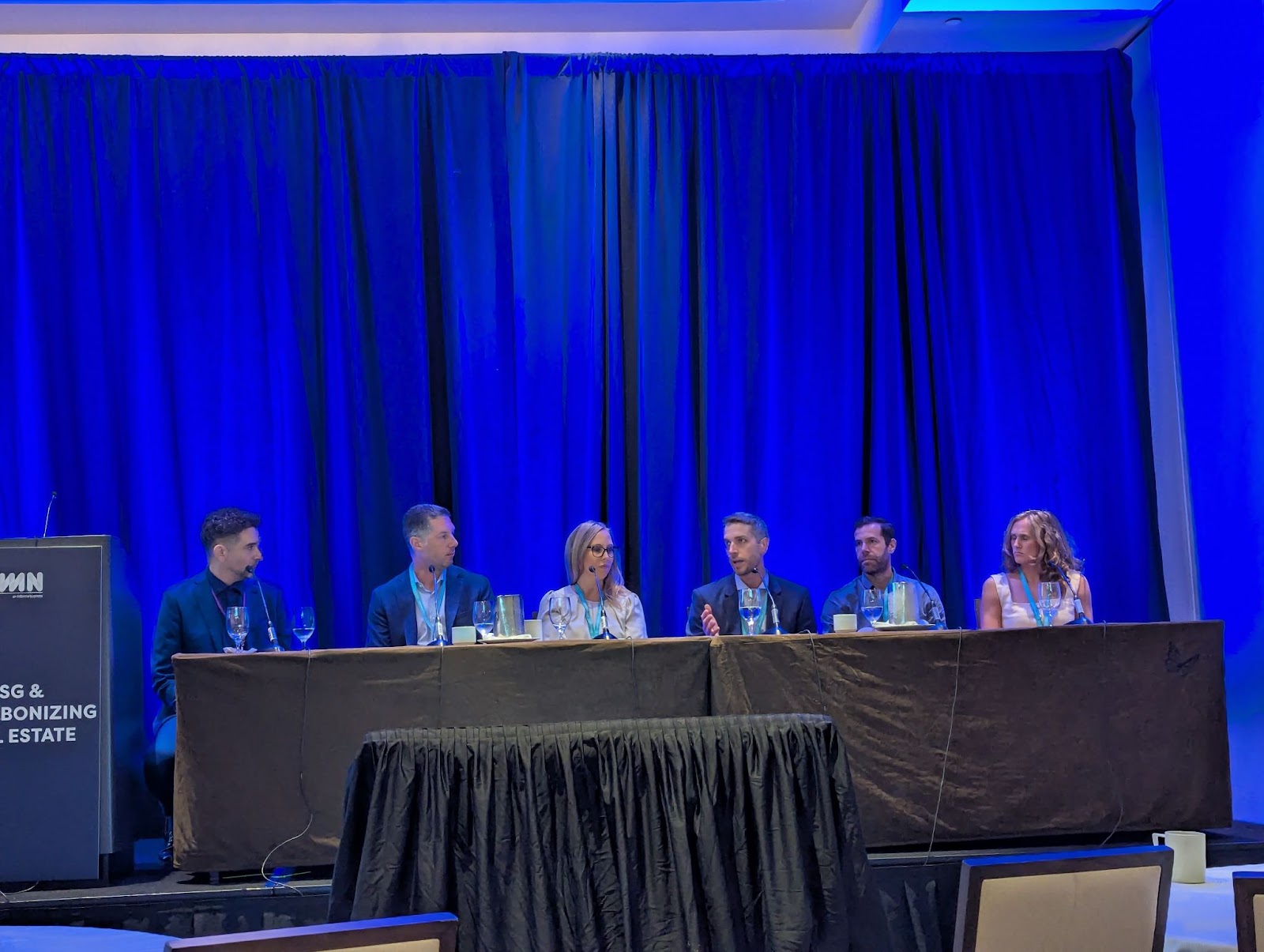
(Image: Panel discussion at the IMN ESG & Decarbonization Forum, featuring Daren Moss (Ares), Katie Cappola (Madison), Adam Slakman (JPMorgan), Helena Posner (CalSTRS), and Blair Astle (HOOPP))
From Reporting to Real Engagement
Engagement between LPs and GPs around decarbonization and ESG has evolved well beyond annual questionnaires and passive reporting. The most successful models now rely on structured, regular check-ins focused on measurable sustainability performance. Panelists described how frequent dialogues grounded in data and directly tied to investment and budgeting decisions help move ESG from an isolated compliance exercise into the heart of asset management.
The shift from superficial reporting to actionable conversations is also reshaping expectations. LPs now demand consistent, incremental improvements rather than broad, vague commitments. Quarterly reviews and dashboards to track important metrics like energy, water, and waste create accountability and transparency, providing benchmarks against peers and indicators of progress. ESG data, once collected primarily for reporting purposes, is now integrated directly into asset-level budgeting and operational planning, establishing sustainability as a core driver of business decisions.
Panelists emphasized the need for GPs to proactively propose strategic sustainability solutions rather than waiting passively for LP direction. The most effective GPs use data to guide specific, achievable decarbonization actions, building trust and alignment. ESG efforts require genuine collaboration, so the conversations between LPs and GPs need to be strategic and results-oriented.
The Bottom Line: Alignment Is an Active Process
True alignment between LPs and GPs does not happen by chance. It requires deliberate leadership, clear expectations, and carefully designed incentives. Panelists stressed that while investment structures create the framework for collaboration, the real catalyst is senior-level commitment to decarbonization goals. Sustainability objectives must flow from the top, reinforced by CIOs and leadership teams actively prioritizing ESG outcomes alongside financial performance.
Market dynamics are shifting rapidly, with LP mandates increasingly influential in setting industry-wide sustainability benchmarks. To keep pace, compensation and performance incentives need to directly reward measurable, real-world decarbonization—not simply adherence to ESG checklists or superficial marketing claims. As these expectations continue to rise, LP pressure becomes a critical force, reshaping investment decisions and driving tangible climate action across the real estate sector.
If you want to see how Audette is helping real estate owners translate capital pressure into meaningful climate performance, let’s talk.
A special thank you to our panelists—Daren Moss (Ares), Katie Cappola (Madison), Adam Slakman (JPMorgan), Helena Posner (CalSTRS), and Blair Astle (HOOPP)—for joining us in this conversation.

Behind-the-scenes at IMN
We recap the IMN Decarbonization Real Estate Forum, highlighting a shift in sustainability perception from cost center to asset value driver. It notes that while decarbonization's impact on NOI and cap rates is recognized, only 36% of companies have carbon-reduction strategies. The author emphasizes the need for actionable, asset-level transition plans and rethinking reporting. With real estate accounting for 40% of carbon emissions and increasing regulations, carbon performance will significantly impact future asset values. The key message: decarbonization is becoming integral to the global economy, and companies leveraging it will gain a competitive advantage. The author calls for innovation and collaboration to reach a zero-carbon future.

Investing in decarbonization as value creation
Zero Carbon Insights is your go-to source for the latest trends, strategies, and expert opinions on decarbonizing commercial real estate. Stay updated with actionable insights on integrating zero-carbon initiatives into your capital planning and navigating evolving market pressures.

Re-thinking the role of audits in decarbonization planning
Welcome to Zero's inaugural issue! We're diving into the essentials of decarbonization planning, exploring sustainable practices, and introducing tech-driven solutions to streamline the journey to a zero-carbon future. Let's accelerate our impact together!

Beyond Compliance: The Real ROI of Meeting Building Performance Standards
Owners who treat compliance-awareness as a planning advantage, rather than a regulatory burden, are positioning themselves to protect and grow asset value in the decade ahead.

Rewriting the Retrofit Playbook: How Value-Accretive Decarbonization Protects Asset Performance
How reframing the energy transition around capital planning, valuation, and risk will define the next generation of real estate leaders.

How to Talk About Energy & Carbon Transition in a Real Estate Cash Flow Model
By making decarbonization an integral part of financial strategy, Audette helps real estate portfolios move beyond ambition and into execution.
Behind the Curtain: How LP Pressure and GP Collaboration is Accelerating Real Estate Decarbonization
Inside insights from Audette’s panel at the IMN ESG & Decarbonization Forum on how LP mandates and GP structures are shaping real estate decarbonization.

Why Resilience Must Be Central to Every Real Estate Investment Strategy
Real estate leaders Lauren Zullo and Thomas Stanchak join Audette CEO Christopher Naismith to explore how resilience and decarbonization intersect in real estate investment. They share strategies for aligning capital planning with climate risks, overcoming internal barriers, and driving long-term value through sustainable practices.

Unlocking Value Through Decarbonization: Lessons from Galvanize Real Estate
Galvanize Real Estate proves that decarbonization isn’t just good for the planet—it’s smart business. By treating deferred maintenance as a financial opportunity and embedding sustainability into core strategy, they’re showing how CRE firms can cut emissions and boost returns.

The Opportunity in Resilience—Why Physical Risk Mitigation is More Than Just a Cost Center
As insurance markets pull back from high-risk areas, real estate value is shifting fast. This blog explores how physical risk mitigation is becoming essential—and why it’s a strategic advantage, not just a cost.

Navigating Change: Finding High-ROI Opportunities in Decarbonization
The financial landscape of decarbonization is shifting. Companies that act now will secure long-term ROI, while those who delay will face growing financial risks.

The Impact of Building Performance Standards on Asset Value in North America
Building Performance Standards (BPS) are reshaping real estate investment. Learn how asset managers can leverage BPS to protect NOI, boost valuations, and stay competitive.

Shaping a Sustainable Future: Decarbonization Planning in Real Estate
Decarbonization is transforming real estate by shifting the focus from energy efficiency to long-term, sustainable strategies. This blog highlights insights from industry leaders on creating actionable plans, leveraging standards like LEED v5, and driving value through brown-to-green investments. Learn how to align your portfolio with net-zero goals and lead in a low-carbon future.

Driving actionable net zero plans in multifamily real estate
Multifamily real estate faces unique hurdles in the shift to decarbonization. From managing decentralized energy systems to tackling split incentives, it's not just a matter of if—it's about finding the how. Discover how industry leaders are turning complex data into actionable, scalable strategies for a net-zero future.

The three pillars of a scalable decarbonization program
A guide to building a strong decarbonization program in real estate, focusing on efficiency, capital planning, and organizational alignment.

IMN recap: From decarbonization talk to action
Key takeaways from IMN's ESG & Decarbonizing Real Estate Forum: Three best practices for achieving tangible decarbonization outcomes in real estate

Payback is dead, long live payback
Traditional ROI models in real estate often miss the mark by focusing only on short-term utility costs. Discover why a broader perspective on value creation and protection is crucial for effective decarbonization efforts, with insights from industry leaders.


Future-proofing assets: Managing transition risk to protect value
Join Jonathan Rose Companies and Stoneweg as they apply a transition risk strategy to preserve asset value.
Dirty-to-clean value-add strategies with Galvanize Real Estate
Learn how Galvanize Real Estate ties capital planning decisions to long-term asset performance.
Underwriting retrofit decisions during acquisition
Join Madison International Realty and Crown Realty Partners to discuss retrofit economics and due diligence.
How real estate standards affect asset value and decisions
Join GRESB, USGBC, and Ember Strategies to learn how standards influence capital allocation and asset strategy.
Multifamily retrofit strategy: navigating risk and return
AvalonBay and Greystar share how energy market shifts are shaping multifamily portfolio strategy.
How carbon exposure is beginning to affect asset values
Tishman Speyer and Lendlease Americas break down how carbon and ESG trends are already shaping asset values.